

Supplier: Huangshan Qiangli Chemical Co., Ltd.
Address: No. 23, Weiyi Road Circular Economy Industrial Park Shexian County Huangshan City Anhui Province
Country: China
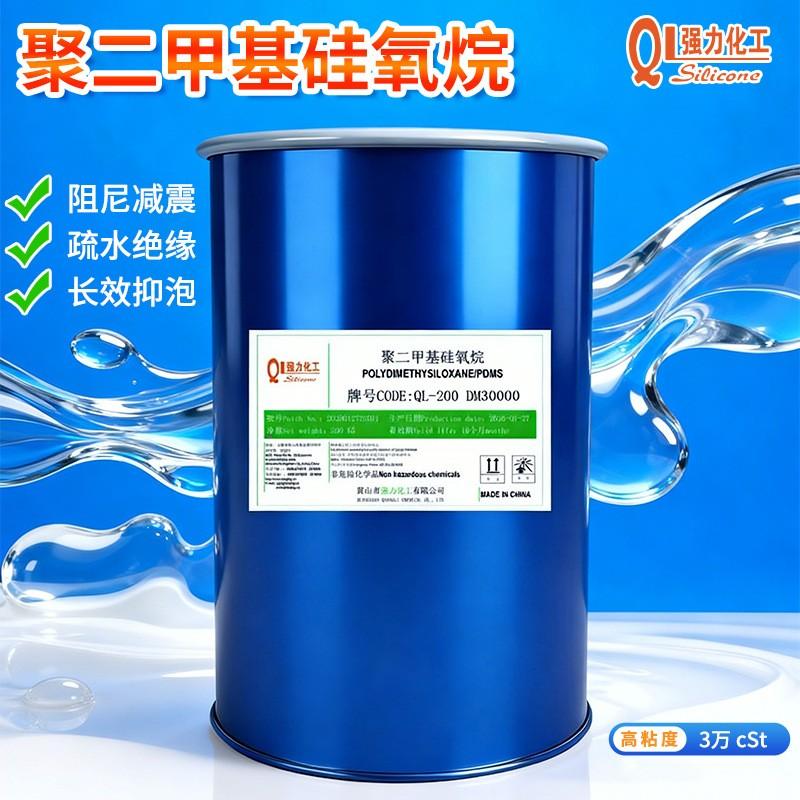
High-viscosity dimethyl silicone oil, 30,000 cSt
Price:
High-viscosity dimethyl silicone oil (typically referring to viscosity ≥ 10,000 cSt, with common grades including 10,000/50,000/100,000/300,000 cSt, with ultra-high viscosity reaching over 1 million cSt) has become a core additive in industries such as manufacturing, personal care, and electronics due to its excellent viscosity-temperature characteristics, resistance to high and low temperatures, lubricity, hydrophobicity, release properties, and chemical stability. At high viscosities, it offers stronger film adhesion, damping and cushioning properties, and long-lasting lubrication and sealing effects. Its core applications are concentrated in scenarios requiring long-lasting lubrication, stable release, damping and cushioning, and sealing protection. The following outlines specific applications and technical highlights by sector, along with a reference guide for typical viscosity selection:
I. Mechanical Industry: Long-lasting Lubrication and Damping (Core Viscosity: 50,000–1,000,000 cSt)
This is the primary application area for high-viscosity dimethyl silicone oil. Its high viscosity enables long-lasting lubrication without carbon buildup and with resistance to high and low temperatures, meeting the special requirements of precision and high-temperature machinery.
Precision machinery lubrication: Used for damping lubrication in watch movements, optical instruments, precision bearings, and micro-gears, forming a stable oil film to ensure smooth, wear-free operation of components. Examples include gear damping in high-end wristwatches and lubrication of microscope focusing mechanisms;
High-Temperature Equipment Lubrication: Suitable for motor bearings, transmission components in ovens and kilns, and high-temperature components around automotive engines. It maintains lubrication performance across a wide temperature range of -50°C to 200°C, replacing traditional mineral oils (to prevent high-temperature carbonization and coking);
Dampers/Buffers: Used in hydraulic dampers, furniture buffer hinges, automotive shock absorbers, and damping components in instruments and meters. The high-viscosity fluid controls component movement speed through viscous resistance, achieving smooth cushioning (e.g., slow-close cabinet door hinges, automotive seat adjustment dampers);
Metal Processing: Mold Release / Rust Prevention: High-viscosity silicone oil formulated as a mold release agent is used for large rubber/plastic molds and metal die-casting molds. It provides strong film adhesion, leaving the workpiece surface smooth after demolding, and can also serve as short-term rust protection for the mold.
II. Rubber, Plastics, and Mold Industry: High-End Mold Release and Product Modification (Core Viscosity: 10,000–500,000 cSt)
Compared to medium- and low-viscosity silicone oils, high-viscosity products form a denser, longer-lasting mold release film. When used for modification, they enhance the weather resistance and surface properties of rubber and plastic products without migration, and do not affect subsequent bonding or printing (requires use with a coupling agent).
High-End Mold Release: Suitable for large fiberglass products (wind turbine blades, yacht hulls), polyurethane foam parts (insulation panels, automotive seats), and silicone products. A single spray application enables multiple demolding cycles, significantly improving production efficiency;
Modification of Rubber and Plastic Products: When added in small quantities to plastics, rubber, and elastomers, it improves the product’s surface smoothness, scratch resistance, and demolding properties, while simultaneously enhancing resistance to high and low temperatures and aging (e.g., high-end plastic pipes, silicone seals);
Modification of hot-melt adhesives and sealants: When added to hot-melt adhesives and silicone sealants, it adjusts the system’s viscosity, enhances the flexibility, hydrophobicity, and weather resistance of the adhesive layer, and prevents cracking (e.g., construction sealants, automotive hot-melt adhesives).
III. Electronics and Electrical Industry: Sealing, Protection, Insulation, and Heat Dissipation (Core Viscosity: 50,000–300,000 cSt)
Leveraging the high insulation properties (volume resistivity ≥ 10¹⁴ Ω·cm), hydrophobicity, and chemical inertness of high-viscosity silicone oil to meet the sealing, insulation, and auxiliary heat dissipation requirements of electronic components, without causing corrosion or affecting circuit performance.
Electronic Component Sealing / Moisture Protection: Used for insulating and sealing transformers, capacitors, and high-voltage switchgear, forming a dense hydrophobic film to prevent moisture intrusion and enhance equipment weather resistance and insulation stability;
Precision Electronic Protection: Used for surface protection of camera modules, sensors, and micro-motors to prevent dust and moisture corrosion, while not affecting component heat dissipation or signal transmission;
Base Material for Thermal Silicone Oil: Serves as the base carrier for high-thermal-conductivity silicone oil (combined with thermal fillers such as aluminum oxide and boron nitride) to produce high-thermal-conductivity thermal grease. This is used for heat dissipation in CPUs, LED chips, and power semiconductors; its high viscosity ensures the grease does not flow or evaporate at high temperatures.
Translated with DeepL.com (free version)
IV. Household and Personal Care: Film-forming and moisturizing agents for high-end skincare and hair care (Core viscosity: 10,000–100,000 cSt, food-grade / cosmetic-grade)
Food-grade / Cosmetic-grade high-viscosity dimethicone (compliant with USP/EP/Chinese Pharmacopoeia standards) offers film-forming properties far superior to those of medium- and low-viscosity silicones. It provides long-lasting moisture retention without stickiness, making it a core ingredient in high-end skincare and hair care formulations.
High-end Skincare: Added to face creams, lotions, and sunscreens, it forms a lightweight, breathable, water-repellent film on the skin’s surface to reduce water evaporation and provide long-lasting hydration. It also enhances the product’s texture (smooth and non-sticky) and boosts the water- and sweat-resistant properties of sunscreens.
Hair Care Products: Used in high-end conditioners, hair masks, and essential oils, it adheres to the surface of hair cuticles, fills in gaps between cuticles, and repairs dry, frizzy hair, leaving it smooth and lustrous. Furthermore, the film-forming properties of high-viscosity silicone oil ensure longer-lasting hair care effects (less prone to being washed off);
Cosmetics: Used in liquid foundations, lipsticks, and mascaras to improve the smoothness, water resistance, and longevity of makeup, preventing caking and smudging.
V. Building Materials and Waterproofing: Hydrophobic Protection and System Modification (Core Viscosity: 100,000–500,000 cSt)
Hydrophobic Modification of Building Materials: Added to cement mortar, concrete, and waterproof coatings to enhance the materials’ hydrophobicity and water resistance, preventing moisture penetration and improving freeze-thaw resistance and weather resistance (e.g., roof waterproof coatings, exterior wall insulation panels);
Glass/Stone Protection: Formulated into hydrophobic protective agents and sprayed onto glass, marble, and tile surfaces to form a long-lasting hydrophobic film, providing waterproofing, stain resistance, and easy cleaning (e.g., shower enclosure glass, outdoor stone curtain walls).
VI. Other Specialized Applications
Textile Industry: Used for softening treatments in high-end textiles, particularly synthetic fibers and wool products, to improve fabric smoothness, drape, and wrinkle resistance; the film-forming properties of high-viscosity silicone oil ensure longer-lasting treatment effects;
Food Industry (Food-Grade): Used for demolding in food machinery (e.g., bread and pastry molds) and for hydrophobic modification of food packaging materials. Complies with food contact standards, is odorless, and does not migrate;
Aerospace: Used for lubrication and sealing of precision instruments and engine components in the aerospace sector. Suitable for extreme temperature ranges from -60°C to 250°C, ensuring equipment stability in harsh environments.
Core Selection Guide for High-Viscosity Dimethyl Silicone Oil (by Application)
Application Scenario Typical Viscosity Specifications (cSt) Key Requirements
Precision machinery damping / Watch lubrication 500,000–1,000,000 Low volatility, high damping stability
Large-Scale Mold Release 100,000–500,000 Dense film formation, long-lasting release
Electronic Insulation and Sealing 50,000–300,000 High insulation, hydrophobic
High-End Skincare and Hair Care 10,000–100,000 (Cosmetic Grade) Non-irritating, smooth texture, low volatility
Damping Hinges / Shock Absorbers 100,000–1,000,000 Good viscosity-temperature characteristics, no sedimentation
Key Usage Precautions
High-viscosity dimethyl silicone oil is a viscous paste or liquid at room temperature with poor flowability. Before use, it can be gently heated (≤50°C) to reduce viscosity, or blended with low-viscosity dimethyl silicone oil to adjust viscosity for easier application;
When used for modifying rubber, plastics, or building materials, if improved adhesion between the silicone oil and the substrate is required, use it in combination with a silane coupling agent (e.g., KH550, KH560) to prevent migration and leaching of the silicone oil;
In the food and personal care sectors, food-grade or cosmetic-grade high-viscosity dimethyl silicone oil must be selected, and compliant test reports (e.g., for heavy metals, microorganisms, and volatile organic compounds) must be provided.
I. Mechanical Industry: Long-lasting Lubrication and Damping (Core Viscosity: 50,000–1,000,000 cSt)
This is the primary application area for high-viscosity dimethyl silicone oil. Its high viscosity enables long-lasting lubrication without carbon buildup and with resistance to high and low temperatures, meeting the special requirements of precision and high-temperature machinery.
Precision machinery lubrication: Used for damping lubrication in watch movements, optical instruments, precision bearings, and micro-gears, forming a stable oil film to ensure smooth, wear-free operation of components. Examples include gear damping in high-end wristwatches and lubrication of microscope focusing mechanisms;
High-Temperature Equipment Lubrication: Suitable for motor bearings, transmission components in ovens and kilns, and high-temperature components around automotive engines. It maintains lubrication performance across a wide temperature range of -50°C to 200°C, replacing traditional mineral oils (to prevent high-temperature carbonization and coking);
Dampers/Buffers: Used in hydraulic dampers, furniture buffer hinges, automotive shock absorbers, and damping components in instruments and meters. The high-viscosity fluid controls component movement speed through viscous resistance, achieving smooth cushioning (e.g., slow-close cabinet door hinges, automotive seat adjustment dampers);
Metal Processing: Mold Release / Rust Prevention: High-viscosity silicone oil formulated as a mold release agent is used for large rubber/plastic molds and metal die-casting molds. It provides strong film adhesion, leaving the workpiece surface smooth after demolding, and can also serve as short-term rust protection for the mold.
II. Rubber, Plastics, and Mold Industry: High-End Mold Release and Product Modification (Core Viscosity: 10,000–500,000 cSt)
Compared to medium- and low-viscosity silicone oils, high-viscosity products form a denser, longer-lasting mold release film. When used for modification, they enhance the weather resistance and surface properties of rubber and plastic products without migration, and do not affect subsequent bonding or printing (requires use with a coupling agent).
High-End Mold Release: Suitable for large fiberglass products (wind turbine blades, yacht hulls), polyurethane foam parts (insulation panels, automotive seats), and silicone products. A single spray application enables multiple demolding cycles, significantly improving production efficiency;
Modification of Rubber and Plastic Products: When added in small quantities to plastics, rubber, and elastomers, it improves the product’s surface smoothness, scratch resistance, and demolding properties, while simultaneously enhancing resistance to high and low temperatures and aging (e.g., high-end plastic pipes, silicone seals);
Modification of hot-melt adhesives and sealants: When added to hot-melt adhesives and silicone sealants, it adjusts the system’s viscosity, enhances the flexibility, hydrophobicity, and weather resistance of the adhesive layer, and prevents cracking (e.g., construction sealants, automotive hot-melt adhesives).
III. Electronics and Electrical Industry: Sealing, Protection, Insulation, and Heat Dissipation (Core Viscosity: 50,000–300,000 cSt)
Leveraging the high insulation properties (volume resistivity ≥ 10¹⁴ Ω·cm), hydrophobicity, and chemical inertness of high-viscosity silicone oil to meet the sealing, insulation, and auxiliary heat dissipation requirements of electronic components, without causing corrosion or affecting circuit performance.
Electronic Component Sealing / Moisture Protection: Used for insulating and sealing transformers, capacitors, and high-voltage switchgear, forming a dense hydrophobic film to prevent moisture intrusion and enhance equipment weather resistance and insulation stability;
Precision Electronic Protection: Used for surface protection of camera modules, sensors, and micro-motors to prevent dust and moisture corrosion, while not affecting component heat dissipation or signal transmission;
Base Material for Thermal Silicone Oil: Serves as the base carrier for high-thermal-conductivity silicone oil (combined with thermal fillers such as aluminum oxide and boron nitride) to produce high-thermal-conductivity thermal grease. This is used for heat dissipation in CPUs, LED chips, and power semiconductors; its high viscosity ensures the grease does not flow or evaporate at high temperatures.
Translated with DeepL.com (free version)
IV. Household and Personal Care: Film-forming and moisturizing agents for high-end skincare and hair care (Core viscosity: 10,000–100,000 cSt, food-grade / cosmetic-grade)
Food-grade / Cosmetic-grade high-viscosity dimethicone (compliant with USP/EP/Chinese Pharmacopoeia standards) offers film-forming properties far superior to those of medium- and low-viscosity silicones. It provides long-lasting moisture retention without stickiness, making it a core ingredient in high-end skincare and hair care formulations.
High-end Skincare: Added to face creams, lotions, and sunscreens, it forms a lightweight, breathable, water-repellent film on the skin’s surface to reduce water evaporation and provide long-lasting hydration. It also enhances the product’s texture (smooth and non-sticky) and boosts the water- and sweat-resistant properties of sunscreens.
Hair Care Products: Used in high-end conditioners, hair masks, and essential oils, it adheres to the surface of hair cuticles, fills in gaps between cuticles, and repairs dry, frizzy hair, leaving it smooth and lustrous. Furthermore, the film-forming properties of high-viscosity silicone oil ensure longer-lasting hair care effects (less prone to being washed off);
Cosmetics: Used in liquid foundations, lipsticks, and mascaras to improve the smoothness, water resistance, and longevity of makeup, preventing caking and smudging.
V. Building Materials and Waterproofing: Hydrophobic Protection and System Modification (Core Viscosity: 100,000–500,000 cSt)
Hydrophobic Modification of Building Materials: Added to cement mortar, concrete, and waterproof coatings to enhance the materials’ hydrophobicity and water resistance, preventing moisture penetration and improving freeze-thaw resistance and weather resistance (e.g., roof waterproof coatings, exterior wall insulation panels);
Glass/Stone Protection: Formulated into hydrophobic protective agents and sprayed onto glass, marble, and tile surfaces to form a long-lasting hydrophobic film, providing waterproofing, stain resistance, and easy cleaning (e.g., shower enclosure glass, outdoor stone curtain walls).
VI. Other Specialized Applications
Textile Industry: Used for softening treatments in high-end textiles, particularly synthetic fibers and wool products, to improve fabric smoothness, drape, and wrinkle resistance; the film-forming properties of high-viscosity silicone oil ensure longer-lasting treatment effects;
Food Industry (Food-Grade): Used for demolding in food machinery (e.g., bread and pastry molds) and for hydrophobic modification of food packaging materials. Complies with food contact standards, is odorless, and does not migrate;
Aerospace: Used for lubrication and sealing of precision instruments and engine components in the aerospace sector. Suitable for extreme temperature ranges from -60°C to 250°C, ensuring equipment stability in harsh environments.
Core Selection Guide for High-Viscosity Dimethyl Silicone Oil (by Application)
Application Scenario Typical Viscosity Specifications (cSt) Key Requirements
Precision machinery damping / Watch lubrication 500,000–1,000,000 Low volatility, high damping stability
Large-Scale Mold Release 100,000–500,000 Dense film formation, long-lasting release
Electronic Insulation and Sealing 50,000–300,000 High insulation, hydrophobic
High-End Skincare and Hair Care 10,000–100,000 (Cosmetic Grade) Non-irritating, smooth texture, low volatility
Damping Hinges / Shock Absorbers 100,000–1,000,000 Good viscosity-temperature characteristics, no sedimentation
Key Usage Precautions
High-viscosity dimethyl silicone oil is a viscous paste or liquid at room temperature with poor flowability. Before use, it can be gently heated (≤50°C) to reduce viscosity, or blended with low-viscosity dimethyl silicone oil to adjust viscosity for easier application;
When used for modifying rubber, plastics, or building materials, if improved adhesion between the silicone oil and the substrate is required, use it in combination with a silane coupling agent (e.g., KH550, KH560) to prevent migration and leaching of the silicone oil;
In the food and personal care sectors, food-grade or cosmetic-grade high-viscosity dimethyl silicone oil must be selected, and compliant test reports (e.g., for heavy metals, microorganisms, and volatile organic compounds) must be provided.
SEND INQUIRY
Please fill in fully your information to send email


CATEGORY
 Agriculture