

Address: Zhao County, Shijiazhuang, Hebei
Country: China
Industrial Packaging Machines
Price:
Industrial Packaging Machines
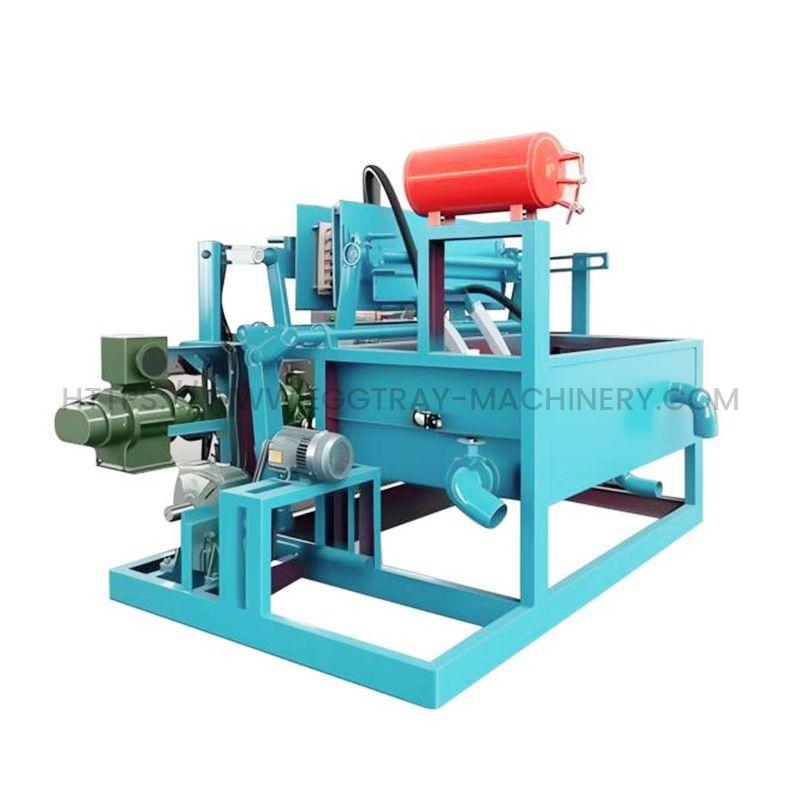
Industrial packaging machines are specialized automated equipment used in industrial production to complete product packaging processes. They encompass various types, including pulp molding machines, sewing and packing machines, stretch wrapping machines, and filling and sealing machines, and are widely used in industries such as 3C electronics, food, cosmetics, and logistics. Their core advantage lies in high efficiency and automation, enabling mechanized operation of the entire packaging process, including raw material processing, product forming, sealing, and bundling. This significantly improves packaging efficiency, ensures packaging consistency, and reduces labor costs. Furthermore, they are compatible with various environmentally friendly or conventional packaging materials such as pulp, plastics, and fabrics, meeting the protection, storage, transportation, and aesthetic needs of different products. They are an indispensable key supporting equipment in modern large-scale industrial production.
Industrial Packaging Machine Classification
Pulp molding reciprocating machines and rotary drum machines are two common types of pulp molding equipment, each with its own characteristics and applicable scenarios. The following comparative analysis, based on production efficiency, equipment investment, and applicable product types, helps determine which equipment is superior.
Equipment Type Overview
Reciprocating machines: These machines typically use reciprocating motion to form products. They are suitable for producing small batches of non-standard products. The equipment investment is relatively low, and the molds can be changed flexibly, but the production efficiency is generally low.
Rotary drum machine: It uses a rotating drum to form products, which is suitable for continuous production of large batches of standardized products. It has high production efficiency, but the equipment investment is large, the mold cost is high, and the product standardization requirements are high.
Performance Comparison
Production efficiency: Due to its continuous operation characteristics, rotary drum machines generally have higher production efficiency than reciprocating machines, especially in large-scale production.
Equipment cost: Reciprocating machines have lower initial investment and are simpler to maintain; Drum machines have higher equipment prices, but the unit cost may decrease in the long run due to increased efficiency.
Product adaptability: Reciprocating machines are more suitable for complex shapes or small-batch customized products, while rotary drum machines are good at large-scale production of regular shapes.
Energy consumption and maintenance: Reciprocating machines have lower energy consumption and are easier to maintain; Drum machines have higher energy consumption, but are more automated and reduce reliance on manual labor.
Selection Recommendation
If production needs are mainly small-batch and diversified, reciprocating machines are more flexible and economical.
If you are looking for high-efficiency, low-cost mass production, a rotary drum machine is a better choice.
The actual selection needs to be comprehensively evaluated based on the specific product type, production budget, and factory conditions.
If you want to learn more, please visit our website.
Industrial packaging machines are specialized automated equipment used in industrial production to complete product packaging processes. They encompass various types, including pulp molding machines, sewing and packing machines, stretch wrapping machines, and filling and sealing machines, and are widely used in industries such as 3C electronics, food, cosmetics, and logistics. Their core advantage lies in high efficiency and automation, enabling mechanized operation of the entire packaging process, including raw material processing, product forming, sealing, and bundling. This significantly improves packaging efficiency, ensures packaging consistency, and reduces labor costs. Furthermore, they are compatible with various environmentally friendly or conventional packaging materials such as pulp, plastics, and fabrics, meeting the protection, storage, transportation, and aesthetic needs of different products. They are an indispensable key supporting equipment in modern large-scale industrial production.
Industrial Packaging Machine Classification
Pulp molding reciprocating machines and rotary drum machines are two common types of pulp molding equipment, each with its own characteristics and applicable scenarios. The following comparative analysis, based on production efficiency, equipment investment, and applicable product types, helps determine which equipment is superior.
Equipment Type Overview
Reciprocating machines: These machines typically use reciprocating motion to form products. They are suitable for producing small batches of non-standard products. The equipment investment is relatively low, and the molds can be changed flexibly, but the production efficiency is generally low.
Rotary drum machine: It uses a rotating drum to form products, which is suitable for continuous production of large batches of standardized products. It has high production efficiency, but the equipment investment is large, the mold cost is high, and the product standardization requirements are high.
Performance Comparison
Production efficiency: Due to its continuous operation characteristics, rotary drum machines generally have higher production efficiency than reciprocating machines, especially in large-scale production.
Equipment cost: Reciprocating machines have lower initial investment and are simpler to maintain; Drum machines have higher equipment prices, but the unit cost may decrease in the long run due to increased efficiency.
Product adaptability: Reciprocating machines are more suitable for complex shapes or small-batch customized products, while rotary drum machines are good at large-scale production of regular shapes.
Energy consumption and maintenance: Reciprocating machines have lower energy consumption and are easier to maintain; Drum machines have higher energy consumption, but are more automated and reduce reliance on manual labor.
Selection Recommendation
If production needs are mainly small-batch and diversified, reciprocating machines are more flexible and economical.
If you are looking for high-efficiency, low-cost mass production, a rotary drum machine is a better choice.
The actual selection needs to be comprehensively evaluated based on the specific product type, production budget, and factory conditions.
If you want to learn more, please visit our website.


CATEGORY
 Agriculture