

Address: No.59, DongpengAvenue, DevelopmentArea, HuangpuDistrict,Guangzhou
Country: China
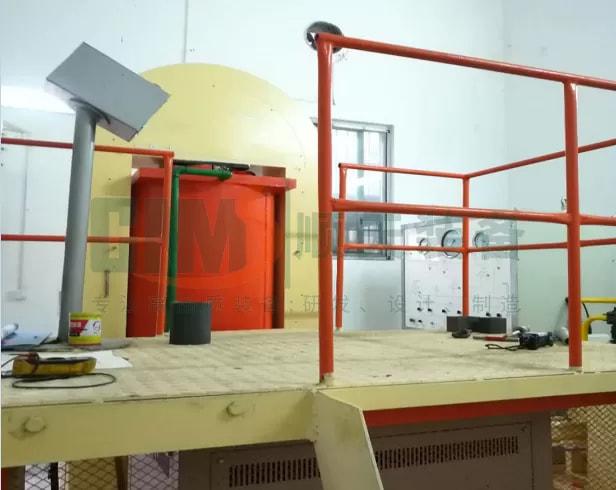
Hot Isostatic Press
Price:
A Hot Isostatic Pressing Machine subjects components to:
High temperatures (typically 800°C–2200°C)
High inert gas pressure (up to 300 MPa or higher)
Uniform isostatic pressure from all directions
The process is conducted inside a high-pressure vessel filled with inert gases such as argon. Under these conditions, internal pores, microvoids, and defects are eliminated through diffusion and plastic deformation, resulting in fully densified materials.
A Hot Isostatic Pressing Machine (HIP Machine) is a high-temperature, high-pressure processing system used to eliminate internal porosity, improve material density, and enhance the mechanical properties of metal, ceramic, composite, and additively manufactured components. By applying uniform gas pressure and elevated temperatures simultaneously, HIP technology produces components with superior strength, fatigue resistance, and reliability.
Hot Isostatic Pressing is widely utilized in aerospace, energy, medical implants, automotive, defense, powder metallurgy, and additive manufacturing industries where critical components require near-theoretical density and exceptional structural integrity.
Core Working Principle
The Hot Isostatic Pressing (HIP) process is governed by the fundamental metallurgical principle of "high temperature and high pressure":
1. High-Temperature Environment: The heating system raises the furnace temperature above the material's recrystallization point, typically ranging from 1000°C to 2000°C.
2. Isotropic High Pressure: Using high-purity argon or nitrogen as the pressure transmission medium, the system applies intense, uniform pressure—typically between 100MPa and 200MPa—from all directions.
3. Densification Process: Under the combined influence of heat and pressure, the material undergoes plastic deformation and creep. Internal micropores and micro-cracks are effectively eliminated, resulting in a uniform, fully densified microstructure.
Core Advantages & Value
1. Eliminate Internal Porosity – Achieve Zero Defects
Increases the density of castings and powder metallurgy components to over 99.9%, significantly enhancing plasticity and fatigue strength.
Increases the density of castings and powder metallurgy components to over 99.9%, significantly enhancing plasticity and fatigue strength.
2. Push Performance Limits
Dramatically improves wear resistance, corrosion resistance, and high-temperature creep performance.
Dramatically improves wear resistance, corrosion resistance, and high-temperature creep performance.
3. Near-Net Shape Manufacturing
Enables the production of complex powder metallurgy parts to near-net shape, substantially reducing material waste and post-processing costs.
Enables the production of complex powder metallurgy parts to near-net shape, substantially reducing material waste and post-processing costs.
4. Diffusion Bonding
Facilitates metallurgical bonding between dissimilar metals or ceramics, enabling the creation of bimetallic or multi-layer composite materials.
Facilitates metallurgical bonding between dissimilar metals or ceramics, enabling the creation of bimetallic or multi-layer composite materials.
Primary Applications
As a strategic high-end manufacturing technology, Hot Isostatic Pressing is widely adopted across critical industries:
●Aerospace: Densification of powder metallurgy turbine disks and blades; healing of casting defects in titanium alloy casings and components.
●Energy & Power: Processing of corrosion-resistant components for nuclear valves, subsea pipelines, and oil & gas extraction equipment.
●Medical Implants: Near-net shaping of cobalt-chrome-molybdenum and titanium alloy artificial joints, ensuring biocompatibility and mechanical integrity.
●Automotive: Sintering and densification of high-strength powder metal parts, including engine valves and transmission gears.
●Semiconductors & 3C: Production of high-purity sputtering targets requiring exceptional density and microstructural uniformity.
●Additive Manufacturing (3D Printing): Post-processing of 3D-printed metal parts to relieve residual stress and achieve full density.


CATEGORY
 Agriculture